
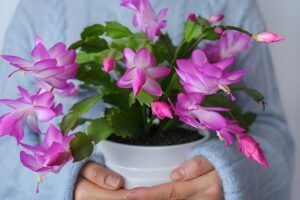
The Christmas cactus is one of the most loved indoor plants — admired for its vibrant winter blooms and easygoing nature. With the right care, this stunning succulent can flourish for decades, rewarding you with festive color every year. Whether you’re a new plant parent or a long-time collector, this guide will show you how to care for a Christmas cactus and keep it blooming beautifully all year round.
🌸 Understanding the Christmas Cactus
The Christmas cactus (Schlumbergera bridgesii) isn’t your typical desert cactus. Unlike prickly succulents, it’s native to Brazil’s tropical rainforests, where it grows on tree branches under filtered sunlight. This means it thrives in humidity and indirect light, making it ideal for indoor environments and let’s explore this Christmas cactus care guide.
To care for your plant correctly, it’s essential to mimic its natural habitat — moderate moisture, diffused light, and stable temperatures are key.
☀️ 1. Light Requirements: Bright, But Indirect
Place your Christmas cactus in a bright room with filtered light. Direct sun can scorch the leaves, while too little light can delay blooming.
- Best locations: East-facing windows or rooms with soft morning sunlight.
- Avoid: Harsh afternoon sun and dark corners.
If your cactus seems pale or the segments are turning yellow, it’s a sign of too much direct sunlight.
💧 2. Watering Schedule: Keep It Moist, Not Soaked
Unlike desert cacti, Christmas cacti enjoy slightly moist soil — but never soggy.
- Water only when the top inch of soil feels dry.
- Use a well-draining potting mix, ideally a blend of cactus soil and peat moss.
- Reduce watering after blooming, as the plant enters a short rest period.
💡 Pro tip: During the fall (around October), slightly reduce watering to encourage bud formation for the holiday season.
🌿 3. Temperature and Humidity
Christmas cacti prefer temperatures between 60–70°F (15–21°C) and humidity levels above 50%.
You can boost humidity by:
- Placing a tray of water with pebbles near the plant.
- Using a small humidifier during winter months.
Keep it away from heaters or cold drafts, which can stress the plant and cause buds to drop.
🌺 4. Fertilizing for Healthy Blooms
Feed your Christmas cactus every 4–6 weeks during spring and summer with a balanced, water-soluble fertilizer (20-20-20).
- Stop fertilizing in late October, when you want to encourage blooming.
- After flowering, give it a rest period of 4–6 weeks before resuming feeding.
This feeding rhythm mimics its natural growth cycle and ensures vibrant, consistent blooms.
🌼 5. Pruning and Repotting
After your Christmas cactus finishes blooming, lightly prune the plant to encourage new growth.
- Trim off 2–3 segments from each stem.
- You can even use these cuttings for propagation (see our propagation guide soon!).
Repot every 2–3 years in fresh soil, ideally during spring. Avoid oversized pots — they retain too much moisture and can lead to root rot.
🎄 6. How to Encourage Blooming
To get those spectacular winter blooms, the Christmas cactus needs a short rest followed by cooler, darker conditions.
Here’s how to trigger blooms naturally:
- Reduce watering in early fall.
- Keep the plant in a cool room (55–65°F) for about 6 weeks.
- Provide 12–14 hours of darkness each night (you can cover it with a light cloth).
- Once buds appear, move it back to its usual bright spot and resume regular care.
With this routine, your cactus will reward you with brilliant pink, red, or white blossoms just in time for Christmas.
👉 Read Our Full Guide On Christmas Cactus Bloom
🪴 Common Mistakes to Avoid
- Overwatering: The biggest cause of root rot.
- Too much sunlight: Can cause leaf discoloration.
- Frequent relocation: Moving the plant while budding can cause blooms to fall off.
Consistency is key — your Christmas cactus thrives on routine.
💡 Related Reading
If you’re also curious about how Thanksgiving, Christmas, and Easter cacti differ, check out our detailed comparison here:
👉 Thanksgiving Cactus: How It Differs from Christmas and Easter Cacti
❓FAQs About Christmas Cactus Care
Q1: How often should I water my Christmas cactus?
Water every 2–3 weeks, or when the top inch of soil feels dry. Adjust based on season and indoor humidity.
Q2: Why won’t my Christmas cactus bloom?
It may not be getting enough darkness or cooler temperatures in fall. Reduce light and watering for a few weeks to encourage bud formation.
Q3: Can Christmas cactus live outside?
Yes, in warm, shaded areas during summer — but always bring it indoors before the first frost.
Q4: Is the Christmas cactus toxic to pets?
Good news — it’s non-toxic to cats and dogs, though overconsumption may cause mild stomach upset.
🌸 Final Thoughts
Caring for a Christmas cactus is all about balance — light, moisture, and rest periods in harmony. With these expert tips, your plant can thrive for years, blooming faithfully every holiday season. 🌿
Whether you’re gifting it or growing it, this festive plant is a symbol of life, patience, and beauty that brightens any home.