
🌵 Christmas Cactus Care Guide: How to Keep It Thriving This Holiday Season
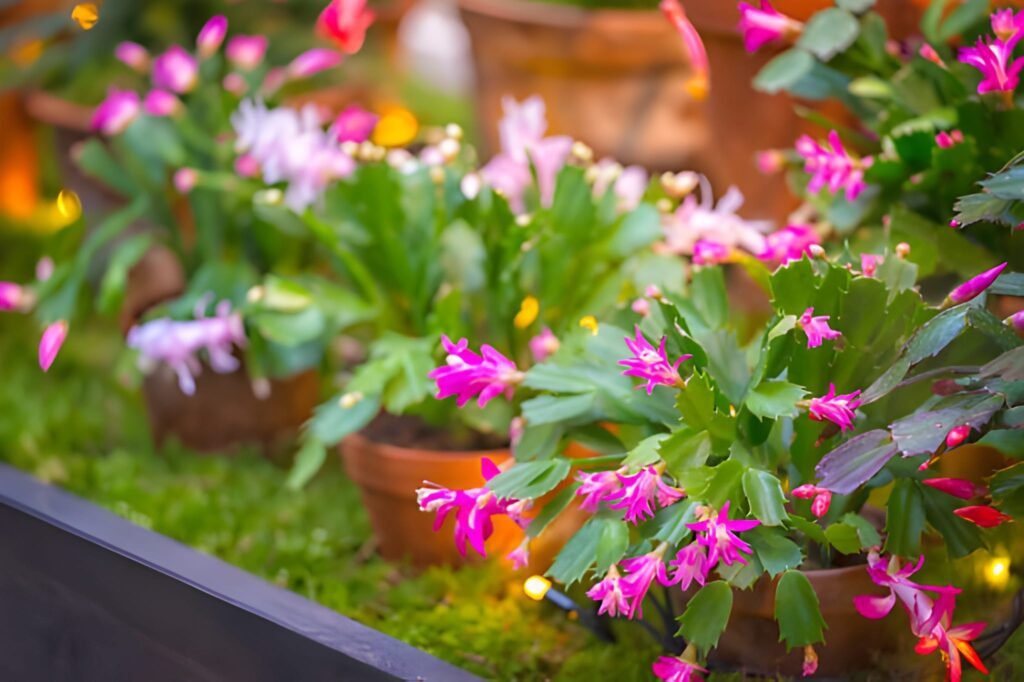
As the festive season approaches, few plants bring the spirit of Christmas into your home quite like the Christmas Cactus. With its cascading stems, rich green leaves, and bright winter blooms, it’s a stunning plant that adds color to any holiday decor.
But unlike the prickly desert cacti, the Christmas Cactus (Schlumbergera bridgesii) is a tropical plant that thrives in humidity and indirect light. Caring for it properly can help you enjoy its colorful flowers year after year — right in time for Christmas.
In this guide, you’ll learn how to care for a Christmas Cactus, help it bloom beautifully, and keep it healthy for decades.
🌞 Understanding the Christmas Cactus
The Christmas Cactus is native to the humid rainforests of Brazil, where it grows on trees and rocks rather than in dry soil. This means it loves moisture, shade, and humidity, not intense sunlight like other cacti.
There are actually three popular holiday cacti:
- Thanksgiving Cactus (Schlumbergera truncata) – blooms in November
- Christmas Cactus (Schlumbergera bridgesii) – blooms in December
- Easter Cactus (Schlumbergera gaertneri) – blooms in spring
Each has slightly different leaf shapes and bloom times, but their care requirements are nearly identical.
💧 Watering Your Christmas Cactus
The number one mistake new plant owners make is overwatering.
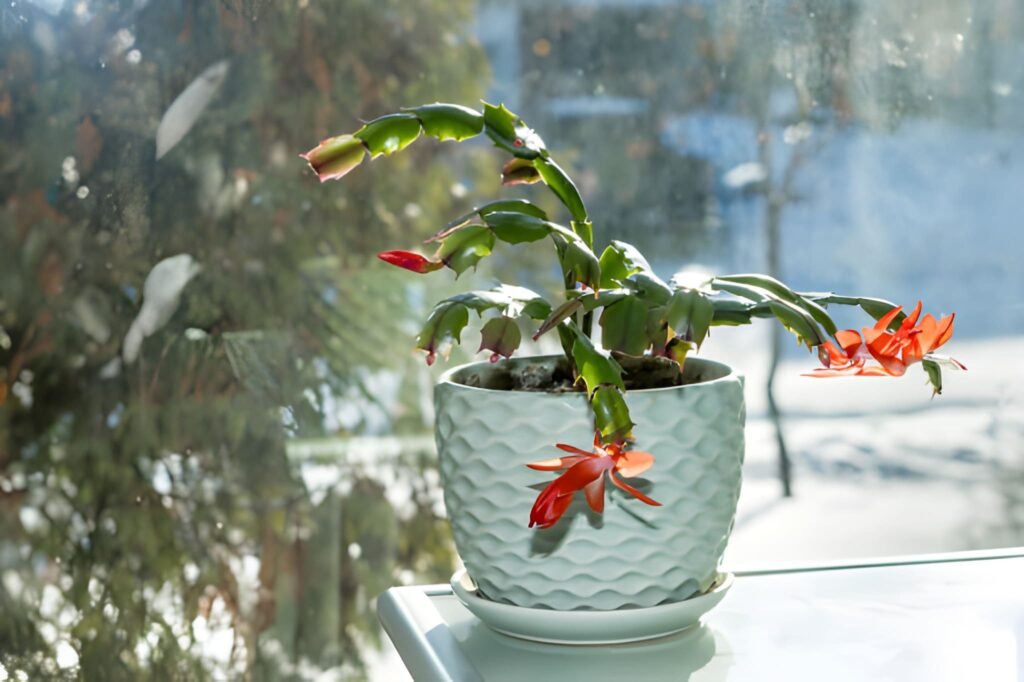
Your Christmas Cactus should be watered only when the top inch of soil feels dry. Unlike desert cacti, this plant prefers evenly moist — not soggy — soil.
Watering tips:
- Always use room-temperature water.
- Let excess water drain completely; never let it sit in a saucer.
- Reduce watering in the fall (October–November) to help trigger blooming.
💡 Pro tip: During the blooming season (December–January), slightly increase watering frequency — this helps flowers last longer.
🌡️ Ideal Light and Temperature Conditions
The Christmas Cactus loves bright, indirect light. Direct sun can burn its leaves, but too little light may prevent blooms.
Best conditions:
- Place near an east- or north-facing window.
- Keep the temperature around 60–70°F (15–21°C) during the day.
- In the fall, reduce both light and temperature (around 55°F) to help it set buds.
Avoid sudden drafts or placing it near heaters — the plant is sensitive to rapid temperature changes.
🌿 The Right Soil and Pot for Your Christmas Cactus
A tropical cactus needs a light, airy, and well-draining soil mix.
Best soil mix:
- 1 part cactus or succulent mix
- 1 part peat moss
- 1 part perlite or sand
This blend mimics its natural environment — rich, loose soil with excellent drainage.
Choose a pot with drainage holes and repot every 2–3 years after blooming season to refresh the soil and encourage new growth.
🍽️ Fertilizing for Healthy Growth
Fertilize your Christmas Cactus monthly from spring through early fall using a balanced, water-soluble fertilizer (like 20-20-20).
Avoid feeding during late fall and winter when the plant is preparing to bloom or is already flowering — too many nutrients can interrupt the cycle.
💡 Tip: During the growing season, a fertilizer slightly higher in potassium helps support flower development.
🌸 How to Make Your Christmas Cactus Bloom
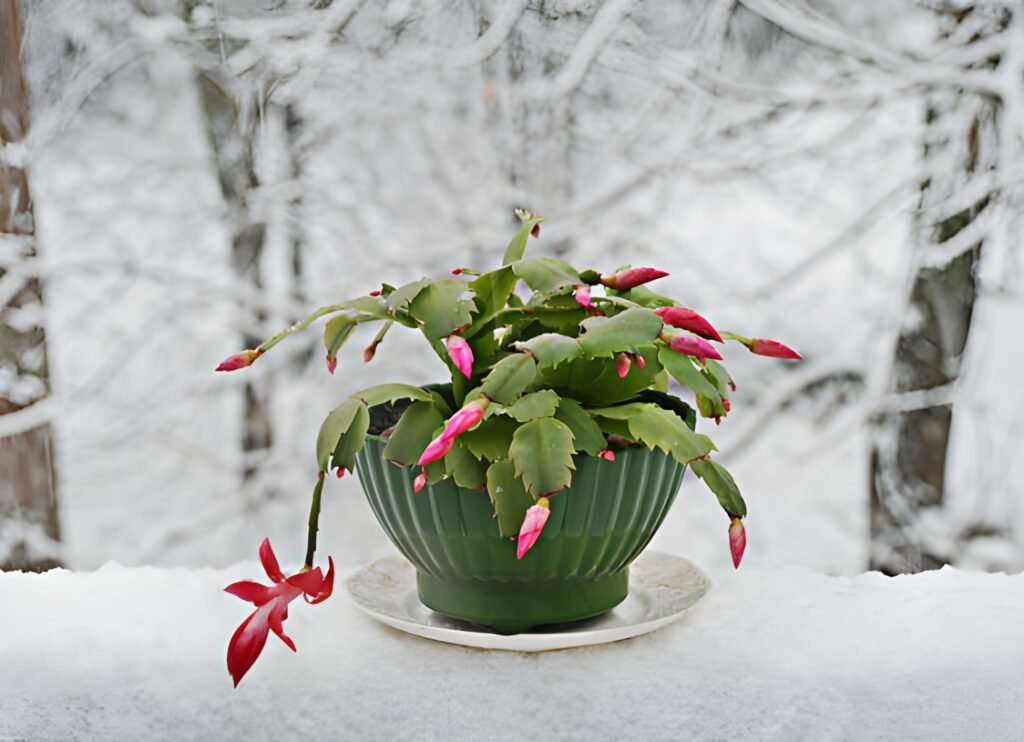
A blooming Christmas Cactus is the highlight of the season.
If yours refuses to flower, it’s probably missing its natural “rest period.”
Follow these steps:
- Reduce light exposure — give it 12–14 hours of darkness daily for 6 weeks before Christmas.
- Lower the temperature — keep it between 55–60°F.
- Cut back on watering during this period.
- Once buds form, return to normal care and don’t move the plant — it dislikes changes during blooming.
🎄 Bonus: When blooms open, place your cactus where it can be seen — near the Christmas tree or windowsill — to add holiday color naturally.
Read Our Full Guide On Christmas Cactus Blooming🌸
🌱 How to Propagate a Christmas Cactus
Christmas Cactus Propagation is simple and rewarding — plus, it makes thoughtful Christmas gifts!
Here’s how:
- After blooming, cut off a segment of 2–3 leaves.
- Let it dry for 24 hours.
- Place the cutting in slightly moist soil or water.
- In 2–3 weeks, roots will appear — and you’ve got a new baby Christmas Cactus.
You can then repot it in its own container and start the cycle again.
Read Our Full Guide On Christmas Cactus Propagation🌵
🪲 Common Christmas Cactus Problems (and Fixes)
| Problem | Cause | Solution |
|---|---|---|
| Yellow leaves | Overwatering or direct sun | Water less, move to indirect light |
| Buds falling off | Sudden light or temperature changes | Keep stable environment |
| Limp stems | Root rot | Let soil dry and repot in fresh mix |
| No blooms | Too much light or heat | Provide darkness & cooler temps |
Regularly inspect your cactus for mealybugs or spider mites — wipe leaves with a damp cloth and mild soap solution if you spot any.
All Problem Fixes Related To Christmas Cactus
🧡 Christmas Cactus in Winter: Seasonal Care Tips
As winter approaches and the holiday season begins, your Christmas Cactus deserves a little extra love.
- Keep it away from cold drafts and windows that freeze overnight.
- Use a humidifier or place a tray of water nearby to maintain moisture.
- Rotate the pot weekly to ensure even light exposure.
These small steps help your plant stay vibrant during the holiday rush.
Read Our Full Guide On Christmas Cactus Problems🌿
🌿 Fun Facts About the Christmas Cactus
- Some Christmas Cacti live for over 50 years!
- It’s one of the few plants that naturally blooms during winter.
- Each bloom lasts about 6–8 weeks if properly cared for.
- It’s non-toxic to pets, making it perfect for festive households.
❓ Frequently Asked Questions (FAQs)
1. How often should I water my Christmas Cactus?
Water when the top inch of soil feels dry. Reduce watering in fall and increase slightly during blooming.
2. How can I make my Christmas Cactus bloom again?
Give it at least 12 hours of darkness each night for 6 weeks in the fall, combined with cooler temperatures.
3. Can I grow a Christmas Cactus outside?
Yes, but only in mild climates (USDA zones 10–12). Bring it indoors before temperatures drop below 50°F.
4. Why are the leaves on my Christmas Cactus limp?
It’s usually from overwatering or poor drainage. Allow the soil to dry before watering again.
5. How long do Christmas Cactus blooms last?
Blooms typically last 4–6 weeks, but with proper care, you can extend it to 8 weeks.
🎁 Final Thoughts
The Christmas Cactus is more than just a holiday decoration — it’s a living tradition that can brighten your winters for decades. With the right care — balanced watering, gentle light, proper soil, and a bit of seasonal attention — you can enjoy its festive blooms every Christmas.
So as the holidays near, give your Christmas Cactus the love it deserves, and it’ll reward you with color, joy, and a touch of nature’s magic right in your home.